Roof Valley Leaks in Los Angeles: What to Check Before Rain
Where two roof slopes meet, runoff becomes concentrated. Learn why valleys deserve a closer look and how to separate a drainage problem from failing waterproofing.
By Smart Roofing, Inc. · Updated
Quick answer
What causes a roof valley to leak?
A roof valley can leak when debris obstructs runoff, roofing materials deteriorate, or the valley flashing and underlayment no longer shed water correctly. On Los Angeles homes, inspect the full drainage path before fall rain rather than treating one ceiling stain as the entry point. A durable repair addresses the actual defect and uses details compatible with the roof covering, not just surface sealant.
Key takeaways
- Valleys carry runoff from adjoining slopes, so small defects can affect a concentrated water path.
- Debris removal and waterproofing repairs solve different problems; an inspection should distinguish them.
- A repair proposal should explain flashing, underlayment, surrounding materials, and any concealed damage.
Understand why roof valleys need special attention
A valley is the inward junction where two sloping roof planes meet. Water from both sides follows that junction toward a gutter, lower roof, or other drainage point. A hip is the opposite shape: an outward ridge that sheds water away. Knowing the difference helps homeowners describe a concern when arranging an inspection.
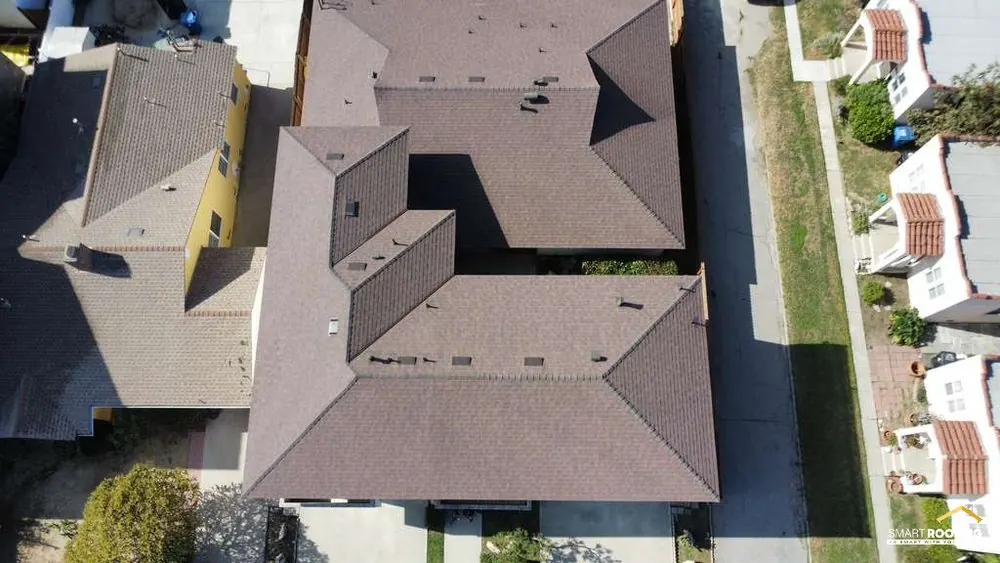
Los Angeles houses with additions, intersecting gables, or complex roof layouts can have several valleys with different drainage conditions. The aerial project photo above shows how adjoining roof planes create these intersections. It illustrates the layout, not evidence of a leak or defect on that completed roof.
Look for warning signs from safe viewpoints
From the ground or a safely accessible window, note visible leaf buildup, displaced tile, damaged shingles, exposed metal, or water overflowing where a valley reaches the gutter. Indoors, photograph new ceiling stains and record whether they appear during steady rain or only when wind drives water against the roof.
Water may travel along decking or framing before becoming visible inside. A stain near a valley does not prove the valley caused it; an uphill vent, skylight, wall connection, or other detail may be involved. Do not walk into a valley to investigate, lift roofing yourself, or enter an attic with unsafe access.
Separate debris buildup from a roofing failure
Leaves, twigs, and sediment can slow runoff and redirect water toward vulnerable edges. Mature trees around properties in Encino, Sherman Oaks, and other established neighborhoods make safe drainage maintenance worth discussing before wet weather. Arrange cleaning that protects the roof covering rather than pressure washing or scraping waterproofing layers.
Cleaning is not a complete repair if the underlying metal is damaged, shingles are deteriorated, or the underlayment has failed. Ask for photos after debris removal so the roofer can explain what remains. Recurring leaks after cleaning deserve investigation of the assembly beneath and beside the valley, not another assumption that leaves were the only cause.
Match the repair to the valley and roof system
Some shingle roofs have an exposed metal valley, while others use a covered valley detail. Tile roofs also require valley details compatible with the tile, underlayment, and surrounding assembly. The absence of visible metal alone does not establish faulty work; the complete detail must be assessed against the applicable installation requirements.
A qualified roofer should review material condition, laps, fastening locations, transitions, and the outlet at the bottom. Coating over an open joint or covering a valley with generic roof cement may hide the issue without restoring the intended drainage path. The proposal should identify the existing system and explain how the repaired layers will direct water downhill.
Ask for a documented scope before approving work
A useful repair estimate identifies which shingles or tiles must be removed, whether the valley flashing and underlayment will be replaced, and how new materials connect to the retained roof. It should also explain the allowance for damaged decking, protection during the work, cleanup, and the limits of any repair warranty.
An isolated valley defect does not automatically require a complete roof replacement. Broader deterioration, multiple recurring leaks, or materials that cannot support a sound connection may justify a larger scope after inspection. Schedule known concerns before forecast rain where possible, and retain completion photos and repair records so future inspections can compare the same areas.
Frequently asked questions
Can a roof valley leak even when no shingles or tiles are missing?
Yes. Debris, deteriorated underlayment, flashing defects, or problems at concealed transitions can admit water without an obvious gap in the roof covering. An inspection should trace the water path and review the underlying details where necessary.
Does a leaking roof valley mean the entire roof needs replacement?
Not necessarily. A localized failure may be repairable when the surrounding roofing is sound and can be integrated with the repair. Widespread wear, recurring leaks, or concealed damage may change the recommendation after assessment.
Should I clean a roof valley myself before Los Angeles rain?
Avoid climbing onto the roof or reaching into a valley from an unstable ladder. Observe from safe viewpoints and arrange professional access and cleaning when needed. If leaking continues afterward, have the waterproofing investigated rather than assuming more cleaning will solve it.
Need a local opinion?
Get a documented roof assessment
Smart Roofing, Inc. serves Los Angeles, the San Fernando Valley, Orange County, and Ventura County. We explain what we find before recommending the next step.
Related local service areas