Flat Roof Parapet Leaks in Los Angeles: Beyond the Roof Surface
A flat roof can leak at the perimeter even when the main surface looks sound. Check the wall, cap, flashing, and drainage as one system.
By Smart Roofing, Inc. · Updated
Quick answer
What Los Angeles homeowners should know
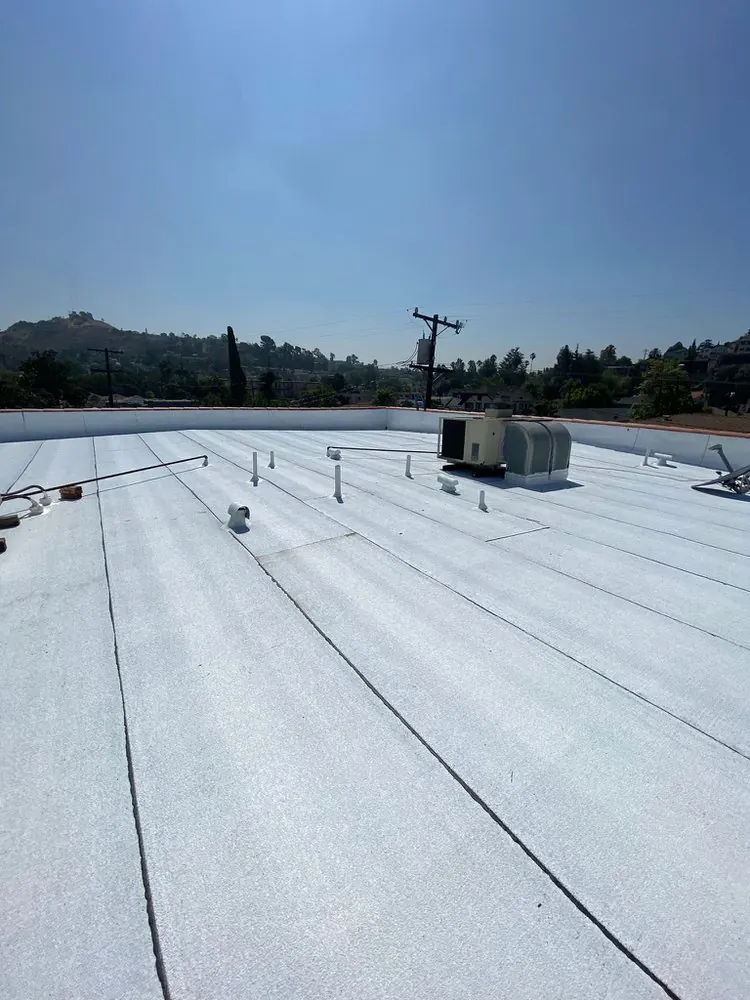
Parapet-area leaks on a Los Angeles flat roof can originate at the wall cap, wall surface, membrane upstand, flashing termination, corners, or scupper connections. Diagnosis should trace how water moves over and through the perimeter instead of assuming the open roof surface is responsible. A coating over the field will not necessarily repair a defective wall or flashing connection.
Key takeaways
- The parapet cap, wall, and roof flashing protect different parts of the same water path.
- A wall stain can originate above the roof surface or at a nearby drainage outlet.
- Repairs and coatings must suit the existing roof system and the condition of the substrate.
Know the parts of a flat-roof perimeter
A parapet is the wall that extends above the roof edge. Its top may be protected by metal coping or another cap detail, while roofing or flashing turns up the inside face. Corners, changes in height, and attachments introduce joints that need to remain weather-resistant as materials expand and contract.
On Los Angeles homes and smaller commercial properties, those perimeter details can be less visible than the roof field. A white or recently maintained surface is not evidence that every wall connection is sound. Ask for an inspection of the perimeter as well as the seams, penetrations, and accessible drainage outlets.
Look above the roof when an interior wall becomes stained
An interior stain near an outside wall can involve loose coping, open cap joints, cracked wall finishes, or water behind the roof flashing. It can also come from a seam or penetration farther away. The position of the stain is a starting point for investigation, not proof of a specific defect.
Document whether staining follows wind-driven rain, appears beneath one corner, or returns after earlier patching. Share photos and maintenance records with the inspector. Stay off wet roofs and away from loose wall materials; if a parapet appears unstable or masonry has shifted, keep clear and obtain an appropriate professional assessment.
Inspect the roof-to-wall connection and corners
The waterproofing should connect the roof surface to the wall without leaving vulnerable gaps at the base, corners, or upper termination. Depending on the roof system, the detail may include reinforced flashing, compatible membrane, termination components, and counterflashing. The correct repair depends on identifying the existing assembly.
Ask the roofer to check for separated edges, deteriorated patches, exposed substrate, and movement at changes in direction. Adding an incompatible patch can create another weak point. Where moisture is trapped beneath the surface, the scope should address investigation and damaged materials rather than simply sealing over them.
Include scuppers and overflow paths in the review
A scupper carries water through a parapet opening. Its connection to the roof and wall needs attention because runoff is concentrated there. Leaves, debris, deteriorated joints, or an obstructed outlet can affect drainage and may contribute to leakage near the perimeter.
Have accessible outlets and any existing overflow provisions reviewed together with the roof slope and drainage layout. A recurring problem may need more than cleaning. Do not cut a new outlet, enlarge an opening, or block an overflow as a DIY repair; drainage changes should be designed and installed for the particular building.
Decide whether the next step is repair, coating, or replacement
If the roof field is serviceable and damage is localized, a targeted flashing or coping repair may be appropriate. A coating may be considered only when the substrate, moisture condition, drainage, and product compatibility support it. It does not automatically correct an open wall joint, failed scupper connection, or deteriorated deck.
Request a written assessment separating roofing work from wall, metal, or structural work. The proposal should identify removal limits, concealed-damage allowances, connection details, documentation, and maintenance needs. For Los Angeles and Valley properties, address known defects before forecast rain rather than relying on the appearance of the main roof surface.
Frequently asked questions
Can a parapet cause a leak when the flat roof looks intact?
Yes. Water can enter at coping joints, wall defects, flashing terminations, corners, or scuppers and reach the interior without an obvious opening in the roof field. The source needs to be traced.
Will a cool-roof coating fix a parapet leak?
Not necessarily. A coating is not a substitute for repairing failed flashing, wall defects, drainage connections, or damaged substrate. Suitability depends on the existing system, moisture condition, and the product's installation requirements.
Does a parapet leak mean I need a complete flat-roof replacement?
No. A localized failure may be repairable if the surrounding assembly is sound. Widespread moisture damage, repeated failures, or a roof near the end of its service life may support a broader scope after inspection.
Need a local opinion?
Get a documented roof assessment
Smart Roofing, Inc. serves Los Angeles, the San Fernando Valley, Orange County, and Ventura County. We explain what we find before recommending the next step.
Related local service areas