Commercial Flat Roof Drainage Before Los Angeles Fall Rain
Blocked drains and slow-moving water can expose small membrane problems quickly. Use this pre-rain checklist for Los Angeles commercial roofs.
By Smart Roofing, Inc. · Updated
Quick answer
What Los Angeles property managers should know
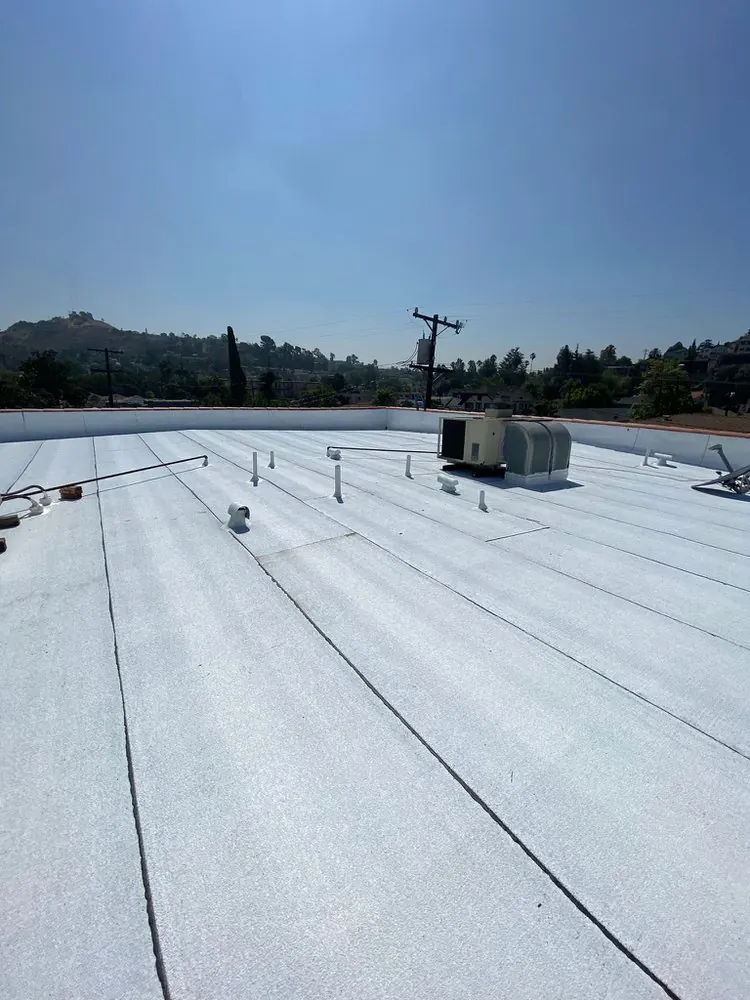
Before fall rain, a Los Angeles commercial flat roof should be checked for blocked drains and scuppers, recurring ponding areas, open seams, deteriorated flashing, damaged penetrations, loose rooftop equipment components, and signs of moisture inside the building. The inspection should document drainage performance and prioritize repairs before water remains on vulnerable roof areas.
Key takeaways
- Clear drainage paths before rain is forecast, using qualified personnel and safe access.
- Document recurring ponding because it may indicate more than surface debris.
- Coordinate roof work around HVAC, solar, and other rooftop equipment.
Start with drains, scuppers, and known ponding areas
Leaves, packaging, windblown debris, and sediment can slow water at drains and scuppers. A pre-rain review should confirm that strainers are secure, drainage routes are open, and overflow provisions are not blocked.
Dark staining, dirt rings, algae, or repeated repair patches can show where water regularly remains after weather events. Recurring ponding may involve drainage layout, deck deflection, insulation, or previous work, so cleaning alone may not solve the underlying condition.
Inspect membrane transitions and rooftop penetrations
Seams, parapet walls, equipment curbs, pipe penetrations, skylights, walkway areas, and roof edges experience movement and service traffic. Look for open laps, cracks, blisters, punctures, deteriorated sealant, displaced metal, and damage around frequently accessed equipment.
Roofing repairs near HVAC, solar, electrical, or communication equipment should be coordinated with the appropriate trades. Unplanned work can disturb flashings or create new penetrations that are not integrated into the existing roof system.
Create a useful maintenance record
Record the roof area, observed condition, photographs, urgency, temporary measures, and recommended permanent work. Note indoor stains, inventory concerns, tenant reports, and any roof zones that require restricted access.
After rain, review whether water cleared as expected and whether any new interior symptoms appeared. Consistent records help property managers compare changes over time, plan budgets, and provide contractors with a clearer history of the roof.
Frequently asked questions
How much ponding water is acceptable on a commercial flat roof?
Standing water should be evaluated in the context of the roof system, drainage design, manufacturer requirements, and how long it remains after rain. Recurring or slow-draining areas deserve professional review rather than a universal depth rule.
Can building staff clean commercial roof drains?
Only when access, fall protection, roof condition, and company safety procedures allow it. Staff should not walk onto wet, damaged, fragile, or unfamiliar roof areas. Qualified roofing personnel should handle unsafe access and suspected roof damage.
Need a local opinion?
Get a documented roof assessment
Smart Roofing, Inc. serves Los Angeles, the San Fernando Valley, Orange County, and Ventura County. We explain what we find before recommending the next step.
Related local service areas