Roof Insurance Inspections in Los Angeles: A Homeowner Guide
An insurer’s roof request is not a repair diagnosis. Learn how to clarify the request, organize roof records, and get an independent condition report without guessing what your policy requires.
By Smart Roofing, Inc. · Updated
Quick answer
What should you do when an insurer requests a roof inspection?
Start by asking your insurer or agent what information is needed, who may provide it, and when it is due. Gather dated roof photos and prior repair, replacement, and warranty records. If you hire a roofer, ask for a written report that describes visible conditions and its limits. A roofing report can document condition; only the insurer can explain coverage, eligibility, renewal, or premium decisions under your policy.
Key takeaways
- Get the inspection request, required format, and deadline from your insurer or agent in writing.
- Collect dated photos, invoices, warranties, and permit or inspection records that are available.
- A roofer can report visible roof conditions, but cannot promise an insurance outcome.
- Stay off the roof; use safe ground-level observations and qualified professionals.
Clarify what the insurer is asking for
A roof inspection request may arrive when you apply for coverage, during a renewal review, after a repair, or as part of a claim. Those situations are not interchangeable. Before scheduling work, ask your insurer or agent what prompted the request and whether it calls for the insurer’s own inspection, photographs, repair records, or an independent roofer’s written assessment.
Ask for the due date, acceptable report format, areas they want documented, and whether completed repairs need follow-up photos or receipts. Keep insurance questions with your insurer or licensed agent; a roofing contractor cannot interpret your policy. If the issue follows a covered event, see our separate guide to roof storm damage and insurance claims in Los Angeles.
Requirements differ by insurer, policy, property, and reason for the request. Do not assume a common online checklist, a neighbor’s experience, or a roofer’s report will satisfy your company’s specific instructions.
Build a roof record before anyone visits
Put together what you already have: the approximate installation date and material if known, past inspection notes, paid invoices, product or workmanship warranties, and records of repairs. Permit or final-inspection documents may also help when available. Do not delay a response while searching for paperwork that no longer exists; tell your agent what you can document and ask what else is required.
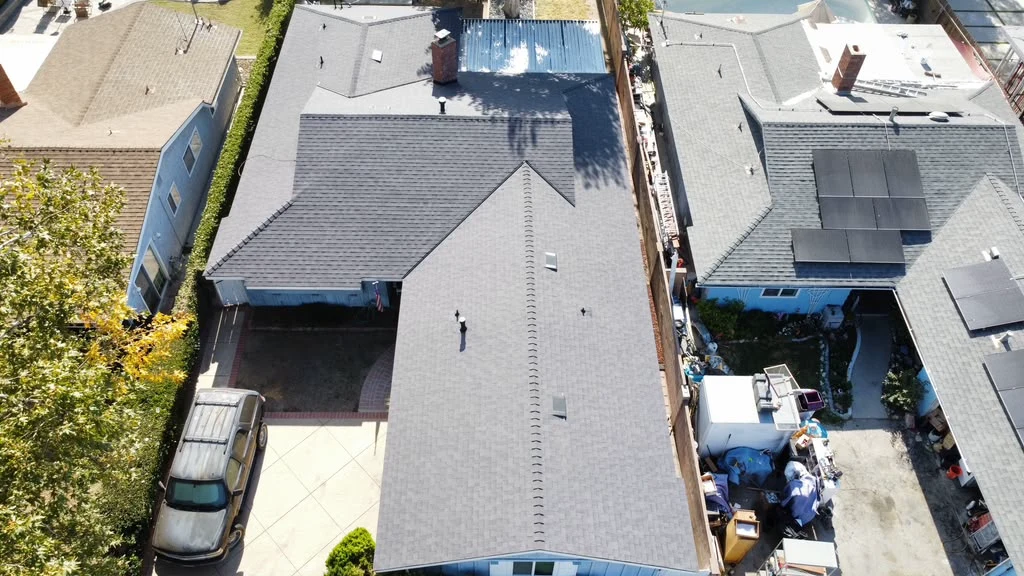
Take clear, dated photos from the ground or another safe location. Useful views can show each roof plane, eaves, gutters, visible penetrations, and the specific area named in the request. If you notice a new interior stain, photograph it and note when it appeared and what the weather was like. A stain’s location does not prove where water entered.
Do not climb onto a steep, wet, hot, or fragile roof to get better pictures. The California Contractors State License Board advises homeowners to stay off roofs for maintenance; its roofing contractor guide also explains how to document work and hire a contractor.
Know what an independent roofer’s report can show
If the insurer allows or requests an independent assessment, ask the roofer to identify the inspected areas, date, visible conditions, photographs, and limits of the review. A useful report separates observable facts—such as displaced shingles, damaged tile, open flashing, or a visible leak—from conclusions that would require opening the roof or attic.
Ask whether the finding appears localized or whether multiple roof areas need further evaluation. If repairs are recommended, request a written scope that names the location, materials, and work proposed. If replacement is recommended, ask what evidence supports that scope and whether a targeted repair is technically appropriate. For more context, read our guide to
choosing a roofing contractor in Los Angeles before hiring.
Respond to a repair request without guessing
If the insurer identifies a condition to address, ask for the specific location, requested correction, deadline, and proof it will accept after the work. Share that written request with the contractor before approving a proposal. If the report uses a broad label such as “roof condition,” ask the insurer or agent to clarify what evidence or action they mean.
A documented, localized repair may be different from a full roof replacement. Have the contractor explain the options and limits in writing, and compare the requested work with an independent condition report.
Our roof repair service explains the targeted-repair path.
Review the scope of a roof replacement before comparing proposals; neither service page determines what your insurer will accept.
Before hiring, verify the contractor’s California license through the CSLB and get the scope, price, exclusions, and completion documentation in writing. If work requires a permit, confirm the requirements with the local building department for the property address; Los Angeles-area cities do not all use the same process.
Keep the insurance decision and the roof diagnosis separate
An independent roofer can describe visible conditions and provide an estimate, but cannot guarantee that a policy will be issued, renewed, or changed—or that a premium or claim will be approved. Do not treat an inspection report as a coverage decision. For policy questions or help understanding a notice, contact your insurer or agent and consult the California Department of Insurance’s
For local roofing help, explore our Los Angeles-area service locations.
Frequently asked questions
Does a roof inspection guarantee that my homeowners policy will renew?
No. A roofer can document roof condition, but the insurer makes coverage and renewal decisions under its own requirements and your policy. Ask the insurer or agent what the request means for your specific policy.
Should I use my own roofer or the insurer’s inspector?
Follow the insurer’s written instructions and ask whether it accepts an independent roofer’s report, requires its own inspection, or needs both. Do not assume one report replaces the other.
What should I give a roofer before an insurance inspection?
Share the insurer’s written request, relevant deadline, known roof age and material, prior repair records, and any safely taken photos of the areas in question. Keep copies of the roofer’s report and proposal.
Can I inspect the roof myself for the insurance company?
You can photograph visible areas from the ground or another safe location, but do not walk on the roof. A qualified roofing professional can assess areas that are not safely visible from the ground.
Does an insurer’s roof inspection mean I need a full replacement?
Not necessarily. An inspection request is not itself a diagnosis. Ask what condition was identified and whether a documented repair can address it; a roofer should explain the evidence and scope behind any replacement recommendation.
What if the request is related to storm damage?
Contact your insurer promptly and follow its claim instructions. Keep dated photos and repair records, and avoid making assumptions about coverage. Our Los Angeles storm-damage insurance guide covers documentation and next steps after unusual weather.
Official consumer resources
- California Department of Insurance — Residential Insurance Guide
- California Contractors State License Board — Roofing Contractor Guide
- California Contractors State License Board — Check a Contractor License
This article is general roofing information, not insurance, legal, or coverage advice. Confirm requirements and deadlines with your insurer or agent.
Need a local opinion?
Get a documented roof assessment
Smart Roofing, Inc. serves Los Angeles, the San Fernando Valley, Orange County, and Ventura County. We explain what we find before recommending the next step.
Related local service areas