Pitched and Flat Roof Together? A Los Angeles Fall Checklist
A shingle or tile main roof and a low-slope addition need different details, but one coordinated inspection. Here is where to focus this October.
By Smart Roofing, Inc. · Updated
Quick answer
What Los Angeles homeowners should know
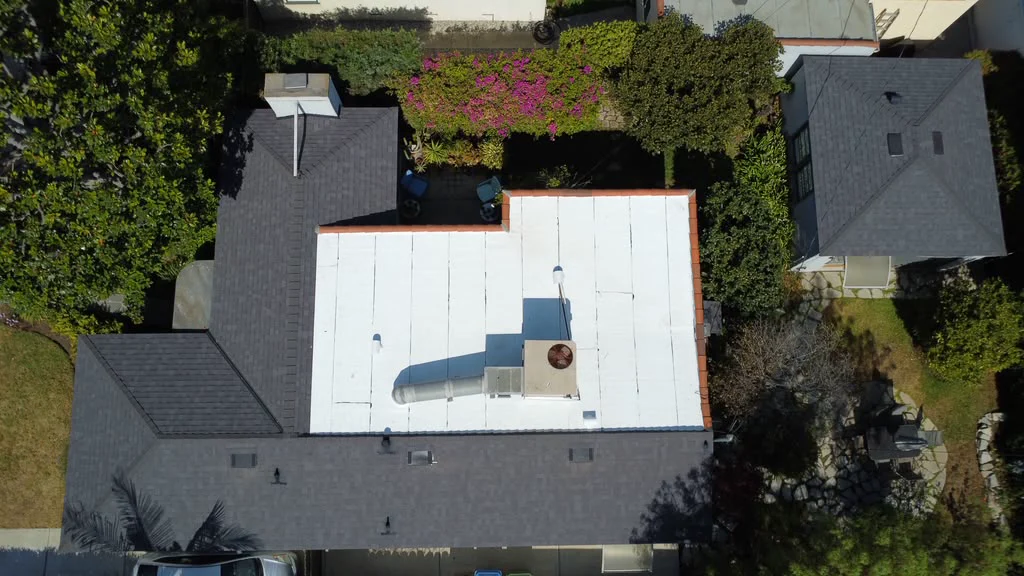
A Los Angeles home with both pitched and low-slope roof sections needs an inspection of each roofing system and the transition between them. Before fall rain, review where upper-roof runoff lands, how the lower section drains, whether flashing connects the materials correctly, and whether old repairs remain compatible. Plan the work around the whole water path rather than treating each surface separately.
Key takeaways
- The joint between roof systems deserves its own documented inspection.
- Runoff from a pitched roof can concentrate water on a lower flat section.
- Each roof section needs suitable materials, even when the repair is coordinated.
Map the roof as one connected drainage system
Los Angeles homes can combine a pitched main roof with a lower-slope addition, porch, or other roof plane. The two surfaces may look unrelated from the street, but water from the upper section can land directly on the lower one. That connection is important when a leak appears near the boundary.
Ask the inspector to identify the direction of runoff, the transition flashing, nearby walls, and the lower roof's outlets. A clear photo record should show both the overall layout and the smaller details. Do not assume that an interior stain points to the roof covering directly above it.
Check the pitched section for heat and wind wear
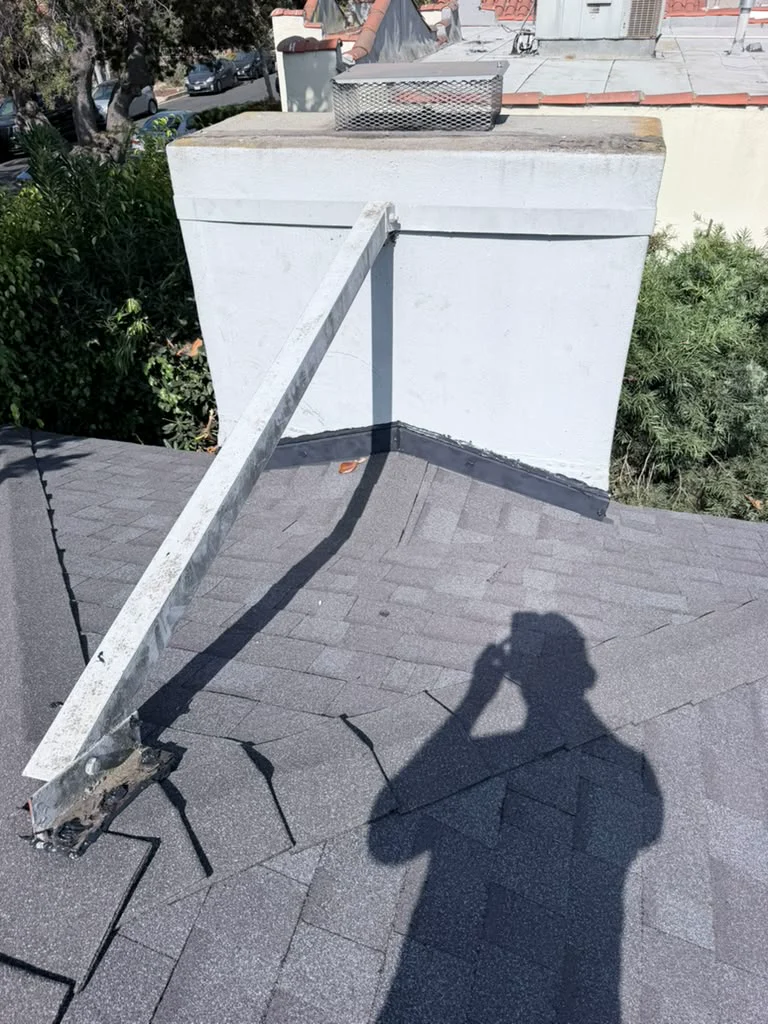
On the pitched roof, a qualified review should cover displaced or damaged shingles or tile, ridge and edge details, valleys, pipe flashings, and roof-to-wall transitions. Summer heat and seasonal winds can expose weak components, but age or appearance alone does not establish the need for a full replacement.
For Valley properties in areas such as Chatsworth, Encino, and Woodland Hills, include previously repaired edges and debris from nearby trees in the review. Ground-level photos and repair records are useful; climbing onto a dusty, steep, or fragile roof is not a safe homeowner inspection method.
Check the lower section for concentrated runoff
A low-slope roof manages water differently from a pitched roof. Drains, scuppers, gutters, seams, penetrations, and wall flashings should be checked together. Debris at the point where the upper roof discharges can slow drainage precisely where runoff is concentrated.
Have recurring standing water assessed rather than covering it with a generic coating. The issue may involve the outlet, slope, substrate, or previous work. Likewise, a patch suitable for asphalt shingles may not belong on the adjacent membrane. Product compatibility and manufacturer details should guide the repair.
Give the transition its own repair plan
The connection between the systems must direct water onto the lower roof without exposing an uphill seam or trapping runoff behind flashing. Its condition can be difficult to judge from the ground, so ask for close-up inspection photos and an explanation of how the roof layers overlap.
When one section is being replaced and the other retained, the proposal should explain how the new work ties into the existing system. Include any removal needed to reach hidden flashing, the limits of the repair, and whether adjacent older materials can support a durable connection. Avoid leaving responsibility for the joint unclear between contractors.
Use October to organize maintenance, not rush decisions
Arrange safe drainage cleaning, compare the current condition with previous photos, and prioritize active leaks or loose components. The City of Los Angeles advises residents to address blocked gutters, overhanging trees, and loose outdoor items ahead of wet weather. Follow current local forecasts rather than assuming that a calendar date guarantees rain.
Request one written assessment that separates urgent repairs, maintenance, and future replacement planning for each roof section. After rain, record any new stains or drainage changes from safe viewpoints. That history is more useful than repeatedly patching the same location without tracing the water path.
Frequently asked questions
Can a house have shingles and a flat-roof membrane together?
Yes. Different roof pitches can require different roofing systems. The materials and installation details must suit each section, with a properly integrated connection between them.
Do both roof sections need replacement at the same time?
Not necessarily. Their condition and remaining service life may differ. A partial replacement should include a documented plan for the transition and identify the limitations of the retained roof.
Why does the flat section leak when the pitched roof looks fine?
Runoff from the pitched roof may collect near a lower-roof drain, seam, wall, or transition. The leak may also be independent of the upper roof. An inspection should trace the whole drainage path rather than assume the cause.
Need a local opinion?
Get a documented roof assessment
Smart Roofing, Inc. serves Los Angeles, the San Fernando Valley, Orange County, and Ventura County. We explain what we find before recommending the next step.
Related local service areas